
Steelborn: Tank Idle RPG
SayGames LtdRole Playing
3.7357.00 Reviews
- Version
- 1.4.0
- Installs
- 500.00K
- Age Rating
- Everyone
Screenshots
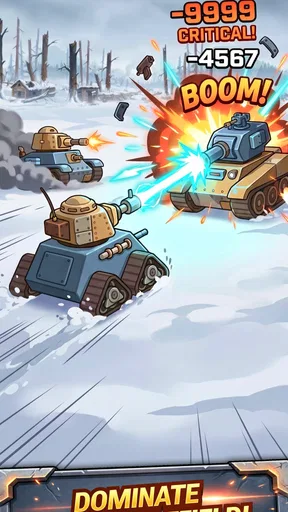
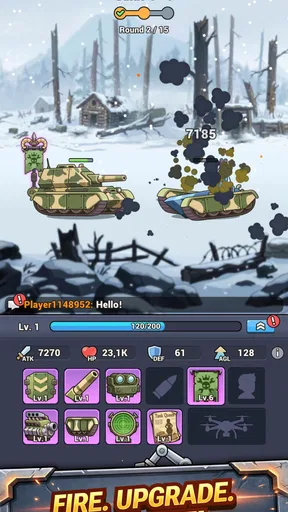
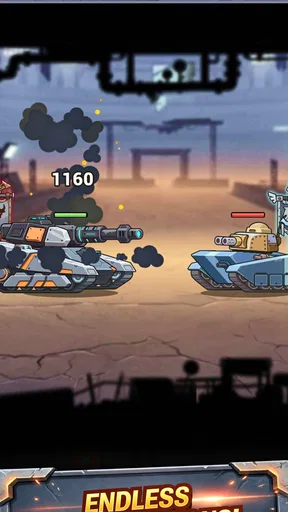
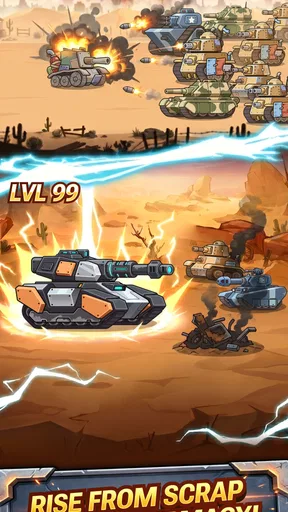
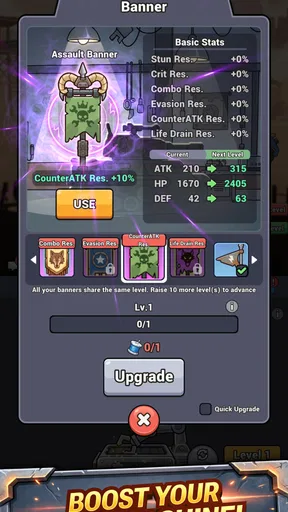
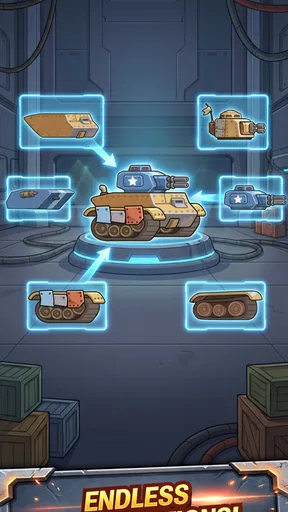
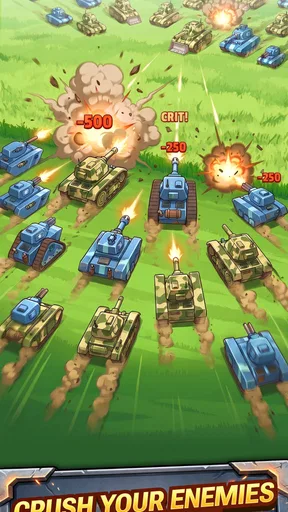
Our Review of Steelborn: Tank Idle RPG
 Analysis by Appyee
I spent time with Steelborn: Tank Idle RPG as a compact role-playing game built around armored PvP battles. Its central appeal is easy to understand: prepare a warrior tank, enter an arena fight, and try to make better decisions than the opponent. What makes the experience interesting is not simply the promise of combat, but the way a short match can turn preparation into a meaningful choice. I often found myself thinking less about tapping quickly and more about whether my current build was ready for the next opponent.
This is a free game from SayGames Ltd, aimed at Everyone, and it runs on Android 8.0 or later. The current version is 1.1.1, while the Android listing shows a 4.1 average from around 1.1 thousand ratings and more than 10 thousand installs. Those figures suggest a relatively small but active audience rather than a massive, established role-playing community. That matters if you prefer discovering a newer arena game before it becomes crowded, although it also means the long-term shape of the experience may depend on how consistently it is updated.
Where the real decisions begin before the arena
The most important part of the game, in my experience, happens before the battle starts. Building a tank is not just a cosmetic exercise; it is a way of deciding what kind of confrontation I want to be prepared for. A tougher setup may help me survive a direct exchange, while a more aggressive approach can make a fight feel shorter but leaves less room for mistakes. Even when the interface keeps things approachable, the underlying question remains useful: am I preparing for a safe, steady win, or am I accepting more danger for a faster result?
That question gives the game more personality than a simple sequence of arena encounters. I could approach each fight as an isolated challenge, but the better habit was to treat my warrior as an ongoing project. Instead of changing everything after one defeat, I tried to identify what actually failed. Was the problem insufficient durability, poor timing, or a build that simply did not suit the opponent? That small pause between fights is where the role-playing layer becomes practical rather than decorative.
I also liked that the tank theme gives these choices a clear identity. In many mobile RPGs, equipment upgrades can feel like abstract numbers attached to a character. Here, the idea of improving an armored fighter makes the planning easier to visualize. I am not merely making a hero stronger; I am deciding how that vehicle-like warrior should survive and win in a competitive arena. That framing helped me remember why I was changing my setup instead of upgrading automatically.
For a new player, my advice is to avoid spending resources immediately after every victory. First, look at the next challenge and consider whether your current configuration already handles it. If it does, saving for a more meaningful improvement can be wiser than making several small changes. This is one of the less obvious strengths of the game: the short battle format encourages quick decisions, but the best results often come from resisting the urge to react too quickly.
Short sessions, but not thoughtless sessions
Steelborn works well when I have only a few minutes available. The arena structure makes it easy to play during a break, while waiting for transport, or after finishing a small household task. I can enter with a clear objective, test a build, and stop without needing to commit to a long story chapter. That makes it more convenient than many traditional role-playing games, which often ask for extended sessions before a meaningful point of progress.
However, “idle” should not be confused with completely passive. The game may be designed to keep progression accessible, but I still found value in deciding when to invest, when to challenge the arena, and when to reconsider my approach. If you want a game where every second depends on manual controls and precise reflexes, this may feel too light. Its satisfaction comes more from preparation and adjustment than from demanding action input.
A realistic everyday use case is a short evening session after work. I might play a few battles, notice that my tank is losing in the same way, and spend the next session testing a more suitable improvement rather than blindly repeating the match. That loop is comfortable because it gives me something to think about without requiring the concentration of a full competitive action game. It is also a good fit for players who enjoy small strategic choices but do not want a complicated spreadsheet of systems.
Risk, reward, and the cost of impatience
The game’s free entry is helpful because I can try the arena without paying upfront. At the same time, in-app purchases range from $0.99 to $299.99 per item, so I would approach spending carefully. The broad price range is important for families and younger players, even with an Everyone content rating. I recommend treating purchases as optional convenience rather than part of the basic admission price, and I would set device-level spending controls before handing the game to a child.
The main risk is not only financial. It is also the temptation to chase an immediate improvement whenever a battle goes badly. A defeat can make a purchase or quick upgrade feel like the obvious answer, but that does not necessarily solve the underlying problem. I found it more satisfying to ask whether I had chosen the wrong kind of preparation. If the issue is strategic, adding power without changing the plan may only postpone another loss.
That creates a useful trade-off between short-term progress and long-term flexibility. Spending resources on one strong direction can make the current arena easier, but it may leave the tank less adaptable later. Holding back can feel slower, especially after a frustrating defeat, yet it preserves options. I would particularly recommend patience to players who enjoy planning several battles ahead rather than maximizing the next result.
The game is also less suitable for anyone who dislikes competitive pressure altogether. Even a friendly-looking arena can make progression feel like a test of your choices, and repeated losses may become irritating if you prefer guaranteed advancement. In that case, a story-focused RPG with a fixed campaign may be a better alternative. Steelborn is more appealing when the possibility of being outplayed is part of the fun.
Adapting instead of repeating the same build
My strongest practical lesson was to stop treating one successful setup as a universal answer. A build that performs well against one type of challenge may not remain comfortable when the pressure changes. Because the game centers on a warrior tank rather than a large party, each adjustment feels more personal: I am reshaping one combat identity instead of swapping through a long roster of characters.
When I lost, I tried a three-step review. First, I considered whether the defeat happened early or late. A quick collapse suggested that the tank lacked enough protection for the encounter, while a close loss pointed more toward an inefficient offensive plan or a decision made too late. Second, I checked whether I had invested in a feature simply because it was available. Third, I asked whether I was building for the opponent in front of me or for a future challenge. This process is simple, but it prevents random changes.
That is also where counterplay becomes meaningful, even without turning the game into a complex competitive simulator. The opponent’s pressure should influence my preparation. If I keep answering every problem with the same upgrade, I am giving up the chance to adapt. A better approach is to change one major assumption at a time, then see whether the result improves. Changing everything at once may produce a win, but it teaches me very little about why the win happened.
Players who enjoy experimentation should get more from the game than players who only want a single dominant formula. I liked having a reason to revisit earlier decisions, but I can also see why someone might find this repetitive if the available choices do not feel distinct enough. The experience depends on whether you enjoy tuning a compact build. It is not the best match for someone looking for a huge collection of heroes, elaborate dialogue, or a sprawling fantasy world.
How the depth develops over time
The long-term appeal depends on whether the preparation loop continues to offer useful decisions after the first excitement fades. At the beginning, simply learning how to make the tank more capable is satisfying. Later, the challenge is to avoid turning progression into autopilot. I found that the game remained more interesting when I set a small goal for each session, such as testing one adjustment or reaching the next fight without spending impulsively.
This personal goal-setting matters because an arena RPG can otherwise become a string of similar victories. The battles are the visible part, but the real sense of progress comes from understanding why a setup works. I would rather improve my ability to read a situation than merely watch the tank become stronger. That distinction separates a game I can enjoy for a while from one I might keep returning to.
Compared with conventional idle RPGs, Steelborn places more emphasis on the arena fantasy and the idea of building one combat-ready tank. Compared with action RPGs, it asks less from my reflexes and more from my preparation. Compared with large competitive games, it is easier to pick up but offers a narrower field of decisions. None of those differences is automatically good or bad; they simply define the audience. I would choose this over a complicated multiplayer title when I want a lighter tactical routine, but I would choose a deeper party RPG when I want character stories and many interacting roles.
The smaller audience shown by its current install count can be read in two ways. It may appeal to players who like finding a less familiar game, but those who depend on a huge community, extensive guides, or a mature competitive scene may feel more comfortable with a better-established alternative. I would not make the decision based on popularity alone. The more relevant question is whether the game’s focused tank-building loop matches the way you like to play.
Its technical entry point is reasonably accessible for older Android devices because the minimum requirement is Android 8.0. That makes it easier to consider on a device that is not running the newest software. Still, compatibility does not guarantee that every phone will feel equally smooth, so I would begin with a short session before committing money or making the game part of a daily routine. The free download makes that trial straightforward.
Who should play it, and who should skip it
I would recommend Steelborn to someone who likes compact PvP role-playing games, gradual character improvement, and decisions that can be made in short bursts. It is particularly suitable for players who enjoy asking, “What should I change before the next fight?” rather than demanding constant manual control. The tank theme also gives the game an immediate identity, which helps it stand out from generic fantasy RPGs with interchangeable heroes.
I would be more cautious about recommending it to players who dislike in-app purchase pressure, even though the game is free to start. The listed purchase range is wide enough that families should discuss spending rules in advance. I would also skip it if my priority were a rich narrative, a large party, or highly technical real-time combat. This is a focused arena experience, not a replacement for every kind of role-playing game.
For younger players, the Everyone rating makes the content broadly approachable, but I would still supervise purchases. For adults, the more important consideration is patience. The game rewards a measured approach, while impulsive upgrading can make the experience feel less satisfying. I found that I enjoyed it most when I treated each loss as information instead of as a demand to spend.
One useful routine is to play in two phases. In the first, I use a battle to observe what is happening without changing anything mid-thought. In the second, I make one deliberate adjustment and test it. This avoids the common mobile-game habit of tapping through menus until something improves. It also creates a clearer sense of cause and effect, which is where the game’s strategic value appears.
My verdict on the arena loop
The best reason to try Steelborn is its compact decision loop: build with purpose, enter the arena, read the result, and adapt. I enjoyed that the tank concept makes progression feel more focused than a crowded character-collection RPG. The free price lowers the barrier to experimenting, and the Everyone rating makes it approachable for a broad audience. The current version, 1.1.1, gives new players a clear starting point, while the developer SayGames Ltd has positioned the game around quick competitive encounters rather than a lengthy campaign.
My reservations are equally clear. The experience can become repetitive if I stop making meaningful adjustments, and players seeking deep action controls or a substantial story will probably outgrow it quickly. The in-app purchase range also means I would play with spending controls enabled, especially on a shared family device. A larger, more established alternative may be preferable for anyone who wants a mature community and a broader strategic ecosystem.
For me, this is a good recommendation when the goal is a light but thoughtful arena RPG that fits around everyday life. I would download it freely, spend the first sessions learning how my tank handles pressure, and delay purchases until I knew which improvements actually suited my play style. If you enjoy planning, adaptation, and the small satisfaction of turning a close defeat into a better build, Steelborn is worth trying. If you want a fully manual combat game or an expansive role-playing adventure, I would point you elsewhere.
Privacy and Permissions
See what permissions an app requests and how it handles your data.
- Wi-Fi connection information
- view Wi-Fi connections
- Other
- view network connections, full network access, control vibration, prevent device from sleeping, Google Play license check
Verdict
Strengths of Steelborn: Tank Idle RPG
- Idle progression lets you earn resources while away from the game.
- Tank upgrades and equipment choices provide satisfying long-term progression.
- Short battles make it easy to play during quick breaks.
- Distinct tanks and abilities add variety to combat and team building.
- The RPG structure offers plenty of goals for dedicated players.
Limitations of Steelborn: Tank Idle RPG
- Progress can feel slow without frequent play or resource spending.
- Combat may become repetitive after the initial stages.
- Higher-level upgrades require significant amounts of in-game currency.
- Some features may be locked behind ads, timers, or optional purchases.
- The small-screen interface can feel crowded during equipment management.
Other Releases by SayGames Ltd
View All
Turbo Stars - Rival Racing
Racing4.6

Johnny Trigger: Action Shooter
Action4.6

DOP 4: Draw One Part
Puzzle4.4

DOP: Draw One Part
Puzzle4.4
Similar Picks in This Category
View All
Hair Dye
CrazyLabs LTD4.4

Monster High™ Beauty Salon
CrazyLabs LTD4.5

Bus Simulator - Bus Games 3D
Jima Apps4.4

Flight Pilot: 3D Simulator
Wildlife Studios4.1


Super Stylist Fashion Makeover
CrazyLabs LTD4.4
Frequently Asked Questions
What kind of game is Steelborn: Tank Idle RPG?
Steelborn: Tank Idle RPG combines idle progression, tank combat, and role-playing elements. You build and upgrade a team of armored vehicles, improve their equipment, and send them into battles that can continue progressing while you are away. The game is designed for players who enjoy gradual development, automated combat, strategic upgrades, and collecting stronger tanks rather than controlling every shot manually.
Can I play Steelborn: Tank Idle RPG offline?
Steelborn: Tank Idle RPG may allow some progression or battles to continue without a constant connection, but several features can depend on online access. Cloud synchronization, advertisements, events, account services, rewards, and certain multiplayer or server-based functions may require the internet. Before traveling or playing offline for a long period, it is worth checking the current in-game requirements and ensuring your progress is properly synchronized.
Does Steelborn: Tank Idle RPG cost money to download and play?
The game is generally presented as a free-to-download mobile title, so you can install it without an initial purchase. However, free gameplay may include optional in-app purchases, advertising, premium currency, special bundles, or time-saving upgrades. You can usually progress without paying, but spending may accelerate tank development or provide additional resources. Review the store listing and device purchase settings before downloading.
Is Steelborn: Tank Idle RPG suitable for beginners?
Steelborn: Tank Idle RPG is approachable for newcomers because much of the combat is automated and the early stages introduce upgrades gradually. Nevertheless, players still need to decide how to spend resources, which tanks to improve, and how to arrange their squad for different encounters. Beginners should avoid investing everything in a single vehicle and should regularly claim idle rewards, complete missions, and compare equipment before advancing.
What should I know about ads, permissions, and device performance?
As with many free idle RPGs, Steelborn: Tank Idle RPG may use advertisements to offer optional rewards or support its free model, while certain permissions can be requested for notifications, purchases, analytics, or account-related services. Performance depends on your phone or tablet, especially during effects-heavy battles and extended sessions. Download the game from an official store, review requested permissions, and use the settings menu to adjust notifications or graphics where available.
Play our best games!


